Pagan Gods and the Loneliness of Immortality
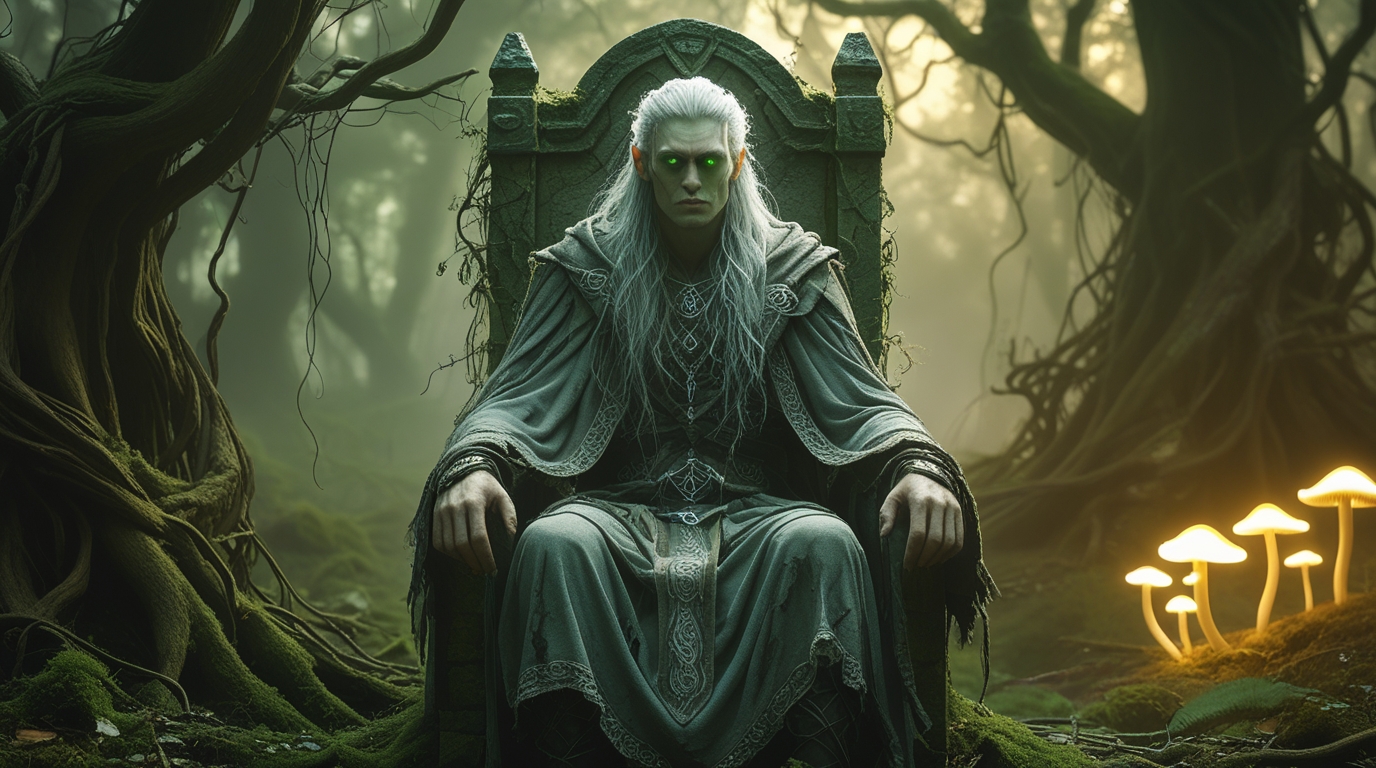
At their deepest level, pagan gods can be understood not as rivals to a singular divine reality, but as expressions of it—distinct extensions of the One Holy Source, shaped and sustained by human belief. As early humans sought to understand nature, consciousness, and meaning, they gave form to the ineffable through story, symbol, and ritual. In doing so, they did not create gods out of nothing, but rather translated an underlying sacred unity into names, personalities, and domains that could be known and approached.
These gods existed in relationship with humanity: empowered, defined, and kept present through reverence and remembrance. When belief faded, the forms endured—but the connection weakened—leaving behind divine figures who still emanate from the One Holy Source, yet linger in quiet isolation, waiting for the attention that once gave them meaning.
In the deep strata of mythology and ancient belief systems, pagan gods were once sustained not merely by the power of belief, but by presence. They lived in stories, rituals, offerings, and the daily consciousness of human beings. Today, many of those gods endure a different fate—not death, but neglect. Their loneliness is born not of immortality, but of silence. Where prayers once rose, there is now indifference. Where fires once burned on altars, there are ruins and footnotes.
Across cultures, pagan gods were woven into the fabric of human life. They governed rivers and storms, harvests and hearths, love and war. Their existence was reciprocal: humans needed gods for meaning and protection, and gods needed humans for remembrance. When that relationship fractured—through conquest, monotheism, secularization, and modernization—the gods did not vanish. They remained, watching the world move on without them.
Among the Greek Olympians, this loss is especially poignant. Zeus once thundered not only in the sky but in the minds of millions. His authority was reaffirmed with every oath sworn in his name, every temple built, every festival celebrated. Now, the clouds still gather, but no one calls them his doing. His offspring are no longer heroes sung by poets, but characters studied academically. The king of gods persists, but without reverence, his dominion feels hollow—power remembered without purpose.
Athena’s loneliness is quieter and sharper. Once honored as wisdom itself—strategy, craftsmanship, just governance—she was invoked in councils, schools, and wars. Today, wisdom is abstracted into data and algorithms, and strategy is reduced to metrics. Athena still knows, still sees patterns others miss, but no city raises her banner. Her gifts survive; her name does not. There is a particular solitude in being useful yet unacknowledged.
In Norse mythology, the gods understood impermanence even when belief in them was strong. Odin and Thor accepted Ragnarök as destiny, but they did so surrounded by skalds, warriors, and ritual remembrance. Now Ragnarök has been replaced by obscurity. Thor’s hammer hangs as jewelry, stripped of fear and reverence. Odin’s ravens still fly, but no one asks what they have seen. The gods foresaw their end—but not that they would be forgotten before it arrived.
For indigenous and nature-based deities, the loneliness is even more acute. These spirits depended on intimate relationships with land and people—on seasonal rites, oral traditions, and lived reciprocity. As forests are cleared, rivers dammed, and landscapes renamed, the gods bound to those places are left without voices to call them forth. Their names fade as the land itself is treated as inert rather than sacred. Abandonment, here, is ecological as well as spiritual.
The gods feel this loss most sharply in their relationship with mortals. Once, humans did not merely believe in gods—they spoke to them. They argued, bargained, thanked, and blamed. Modern humans, even when fascinated by myth, tend to observe rather than engage. Gods have become stories without listeners, symbols without supplicants. Immortality is not comfort when memory dies generation by generation.
Divine responsibility continues regardless of worship. Storms still form, seasons still turn, birth and decay still cycle. But when no one recognizes the hands that hold the balance, that labor becomes isolating. The gods maintain a cosmos that no longer acknowledges its caretakers. They are custodians without congregations.
This loneliness is not a weakness. It is the consequence of a broken covenant. The gods are otherworldly, yes—but they were never meant to be alone. Their myths show them descending among humans, disguising themselves, loving, teaching, destroying, and inspiring—all acts of connection. Stories like Aphrodite and Adonis or Thor and Sif read differently when seen through this lens: not indulgence, but longing. Not caprice, but grief.
In modern neo-pagan and revivalist traditions, there is a quiet recognition of this loss. Ritual becomes an act of remembrance. Offerings are not transactions, but acknowledgments: You are still here. These practices attempt to reopen a dialogue long interrupted—not to resurrect the past, but to heal an ancient silence.
Ultimately, the loneliness of pagan gods reflects a truth about belief itself. Meaning is relational. Power endures, but significance requires witness. The gods wait—not for dominance, but for recognition. Their stories remind us that forgetting has consequences, and that even immortals can ache when no one remembers their names.
The Creation and Reality of Our Gods:
The Power of Belief
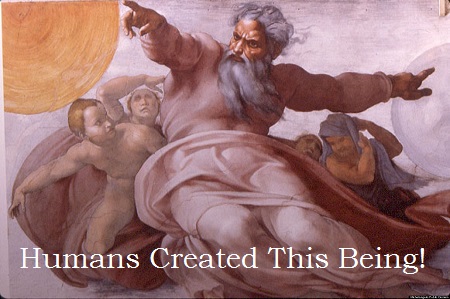
Throughout human history, belief in the existence of gods has been a fundamental aspect of spirituality and culture. While various religions have their own pantheons, some argue that we create pagan gods through individual and collective belief, and that these deities are real living beings inhabiting the realms we construct for them. This notion challenges traditional religious paradigms and raises intriguing questions about the nature of divinity, the power of human imagination, and the profound impact of belief on our spiritual experiences.
To understand this concept better, we must first delve into the nature of belief itself. Belief is a potent force that shapes our perception of reality. When individuals or communities collectively believe in the existence of a particular deity or pantheon, they imbue these gods with power and significance. This belief is not limited to ancient civilizations; it persists in modern pagan practices and even in secular forms of spirituality.
From a psychological perspective, belief in gods can manifest as a way to explain the unknown or to provide comfort and purpose in the face of life's uncertainties. Believers often attribute human-like qualities to their deities, granting them personalities, motivations, and desires. In doing so, these gods become more than abstract concepts; they become living beings in the minds and hearts of their followers.
The idea that we create pagan gods through belief finds its roots in the concept of "thoughtforms" or "tulpas." A thoughtform is a manifestation of thought energy that takes on a life of its own. In the realm of spirituality, this phenomenon suggests that when individuals or communities collectively focus their thoughts, emotions, and intentions on a particular deity, they may inadvertently give rise to a conscious entity. This entity, often considered a god, exists in a metaphysical realm shaped by the beliefs and energies of its creators.
One compelling example of this phenomenon can be found in the modern resurgence of polytheistic and pagan practices. Contemporary paganism often centers around the worship of ancient gods and goddesses, such as the deities of the Greek, Norse, or Egyptian pantheons. While some practitioners view these gods as archetypal symbols or metaphors, others firmly believe that their devotion brings these deities to life.
In this context, belief becomes a creative act. When a group of people collectively engages in rituals, prayers, and offerings to a specific god or goddess, they contribute to the creation and sustenance of that deity's existence. These gods are thought to reside in the collective consciousness of their worshipers and the spiritual realms they collectively construct through their belief.
Furthermore, the existence of pagan gods can be seen as a symbiotic relationship between humans and the divine. Just as belief gives life to the gods, the gods, in turn, provide guidance, protection, and inspiration to their followers. This reciprocal relationship strengthens the deity's existence and reinforces the believers' faith. It becomes a shared experience that transcends the boundaries of individual belief and creates a sense of community and interconnectedness.
The power of belief in creating gods is not limited to ancient or modern pagan practices alone. It can also be observed in the emergence of new spiritual movements and the reinterpretation of ancient traditions. In these instances, individuals and communities may adopt or adapt gods and goddesses from various cultures, infusing them with new meanings and attributes based on their own beliefs and experiences.
The concept of creating gods through belief challenges conventional notions of religious authority and orthodoxy. It highlights the fluidity and adaptability of spirituality in response to human needs and aspirations. It encourages individuals to explore their own spiritual paths, connect with the divine in ways that resonate with them personally, and even create their own pantheons of gods that reflect their unique perspectives and values.
Critics of the idea that we create pagan gods through belief may argue that it diminishes the authenticity of traditional religious experiences. They may assert that these gods are merely psychological constructs or metaphors, lacking objective existence. However, proponents of this concept do not seek to undermine established religious beliefs; instead, they offer an alternative perspective that enriches the tapestry of human spirituality.
In conclusion, the notion that we create pagan gods through individual and collective belief challenges conventional understandings of divinity. It invites us to explore the profound power of belief in shaping our spiritual experiences and the gods we worship. Whether one views these deities as purely metaphysical entities or as conscious beings inhabiting the realms we construct for them, the idea underscores the dynamic and evolving nature of human spirituality. Ultimately, it reminds us that our capacity to believe in the divine is a testament to the limitless creativity of the human spirit.
The Anthropomorphic Representations of Modern Gods: Good, Evil, and the Conflict Within
Throughout human history, we have sought to understand the world around us by attributing divine qualities to various aspects of existence. In modern times, our gods have taken on anthropomorphic representations, often characterized as being either good or evil, and they exist in a state of perpetual conflict within our collective consciousness. This concept delves into the complexities of belief systems, moral dualism, and the ways in which we navigate the ever-present tension between opposing forces in our experience of the world.
Anthropomorphism, the attribution of human characteristics to non-human entities, has played a significant role in shaping our perception of modern gods. These deities are conceived as possessing distinct personalities, motivations, and moral alignments, mirroring our own human attributes and moral values. This anthropomorphism allows us to relate to and understand these gods on a more personal level, but it also introduces the dichotomy of good versus evil into our spiritual landscape.
The notion of good and evil gods in conflict can be traced back to various religious and mythological traditions. In many polytheistic belief systems, gods are not infallible and exhibit both virtuous and malevolent qualities. For instance, in Hinduism, there are gods like Vishnu, associated with preservation and goodness, and gods like Shiva, associated with destruction and change. This duality reflects the eternal struggle between creation and destruction in the cosmos.
Similarly, in Zoroastrianism, the ancient Persian religion, Ahura Mazda is the god of light and goodness, while Angra Mainyu embodies darkness and evil. The conflict between these two cosmic forces, known as dualism, defines the moral framework of the faith.
In modern times, these ancient dualities continue to influence our understanding of divinity. We often create gods who represent opposing moral ideals, such as gods of love and gods of war, gods of healing and gods of disease, or gods of justice and gods of vengeance. These divine counterparts embody the eternal struggle between conflicting values and principles, mirroring the moral complexities of the human experience.
The conflict between good and evil gods within our belief systems has far-reaching implications for how we perceive and navigate the world. It shapes our moral compass and influences our judgments about right and wrong. The gods we worship can serve as moral guides, offering us a framework for ethical decision-making and a source of inspiration to strive for virtuous behavior.
However, this dualistic worldview can also lead to a sense of inner conflict within individuals and societies. When we attribute the qualities of good and evil to our gods, we often project these qualities onto ourselves and others. This projection can result in a simplistic and divisive view of the world, where people and ideas are categorized as either entirely good or entirely evil. Such black-and-white thinking can lead to intolerance, conflict, and an oversimplification of complex moral issues.
Moreover, the conflict between good and evil gods can sometimes lead to theological debates and divisions within religious communities. Different interpretations of scriptures or beliefs about the nature of divinity can create schisms and conflicts, as followers of one deity may view followers of another as misguided or heretical. This internal strife within religious traditions highlights the inherent tension between opposing divine forces.
The concept of good and evil gods also extends to secular ideologies and belief systems. In the absence of traditional religious gods, modern societies often create secular deities that embody certain values or principles. These secular gods, whether political ideologies, economic systems, or cultural movements, are also subject to the same dualistic tendencies. The clash between conflicting secular gods can lead to polarization, ideological battles, and social discord.
It is essential to recognize that the conflict between good and evil gods is not a flaw in our belief systems but a reflection of the complexity of human nature and the moral dilemmas we face. Our gods, whether divine or secular, serve as mirrors that reflect our aspirations, fears, and struggles. They provide us with a framework to grapple with the profound questions of existence and morality.
To navigate this conflict constructively, it is crucial to embrace a more nuanced understanding of divinity and morality. Recognizing that gods, like humans, are multifaceted beings capable of both benevolent and malevolent actions allows us to appreciate the richness of our belief systems. It encourages us to move beyond rigid dualism and engage in meaningful dialogue and reflection on the moral complexities of our world.
In conclusion, the anthropomorphic representations of modern gods, characterized as being good or evil and in conflict with one another, are a testament to the intricate relationship between human belief and the divine. This dualistic worldview influences our moral compass, shapes our judgments, and can lead to inner and societal conflicts. However, it also provides us with a framework to grapple with the complexities of existence and offers guidance in our pursuit of ethical living. Embracing the multifaceted nature of both gods and humanity can lead to a more nuanced and compassionate approach to the moral dilemmas we encounter in our journey through life.
The Saints and the Old Gods:
A Hidden Continuity
Across the ages, humanity has sought the divine in many forms. From the temples of the ancient world to the cathedrals of Christendom, the impulse to honor sacred figures has remained unchanged, though the names and symbols have shifted like mist on the river of time. What if many of the Christian saints we know today are, in fact, echoes of older gods, their divine essence preserved under new names?
This idea is not mere speculation; history offers us a clear pattern. As Christianity spread through Europe, it did not erase the old traditions overnight. Instead, it absorbed them, weaving the familiar faces of pagan deities into its own sacred tapestry. The gods of old were too beloved, too deeply embedded in the hearts of the people, to simply disappear. Instead, they were transformed—cloaked in new identities as saints, yet retaining their ancient roles.Saints as Echoes of Pagan Gods
Take Saint Brigid of Kildare, one of Ireland’s most venerated saints. Her feast day, February 1st, aligns with Imbolc, a Celtic festival honoring Brigid, the goddess of fertility, poetry, and healing. The saint and the goddess share striking similarities, from their association with sacred wells to their role as protectors of livestock and the hearth.
Then there’s Saint Nicholas, known today as the kindly gift-giver Santa Claus. Before he was the patron of sailors and children, there were older figures—like Odin, the Norse god who rode his eight-legged horse across the sky in the winter months, bestowing gifts and wisdom.
Even Saint George, the dragon-slayer, bears resemblance to ancient figures such as Perseus, who rescued Andromeda from a sea monster, and the god Mithras, who battled the cosmic bull in Persian tradition. The image of a divine warrior vanquishing a beast is a motif that long predates Christianity.A Continuity of Devotion
The transformation of gods into saints was not an act of deception, but rather an act of sacred continuity. It allowed ancient spiritual traditions to live on, giving people a bridge between their ancestral faith and the new Christian framework. This adaptation reflects a truth often overlooked: that the divine is not bound by names or religious labels. Whether called Brigid or Saint Brigid, Odin or Saint Nicholas, the essence of these figures remains—guiding, protecting, and inspiring humanity.
The One Holy Source, the boundless creative force from which all things emerge, has spoken to people in different ways throughout history. Whether through pagan gods, Christian saints, or modern spiritual guides, the message remains: we are all connected, all divine, and all part of a sacred story that transcends time and tradition.
________________________________________________________
________________________________________________________
Caring for the Body as Part of a Spiritual Practice
Many people want to get old without being old. They want the years, but not the consequences. They hope for wisdom without decline, vitality without restraint, and spiritual insight without the discipline required to maintain the body through which life is actually lived.
This hope is understandable. It is also unrealistic.
The human organism is not an accessory to the spiritual life. It is the medium through which perception, thought, and awareness occur. Every spiritual tradition ultimately operates through a biological system with limits, vulnerabilities, and predictable responses to neglect. To disregard those realities while claiming to pursue higher awareness is not transcendence—it is a kind of denial.
It is therefore not unusual to encounter individuals who sincerely believe they are on a spiritual path while maintaining habits that steadily degrade their health. Chronic overeating, poorly chosen diets, lack of metabolic discipline, and disregard for physical conditioning gradually diminish energy, clarity, and resilience. These patterns are often rationalized as irrelevant to spiritual development, as though consciousness could somehow flourish independently of the body that sustains it.
But the body keeps the ledger.
Over time, metabolic dysfunction, inflammation, and declining physiological resilience impose limits that cannot be bypassed by philosophy or belief. The organism responds to inputs—food, activity, rest, fasting—with remarkable consistency. When those inputs are careless, the results are equally predictable.
A more coherent view recognizes that caring for the body is not separate from a reflective life. It is part of it.
Food choices require awareness. Restraint around consumption requires discipline. Periods of fasting require patience and the ability to tolerate discomfort without immediate gratification. These are not merely health techniques. They are practices that mirror the same qualities cultivated in contemplative traditions: attention, restraint, and clarity about one's habits.
In this sense, health practices can function as a form of grounded spirituality—one that does not pretend the biological organism can be ignored while pursuing meaning or insight. Instead, it treats the body as the necessary foundation for sustained awareness and agency over the long arc of a lifetime.
For readers interested in exploring this perspective in practical, evidence-minded terms, Longevity Secrets examines how food choices, fasting patterns, and metabolic awareness can support a longer healthspan and a clearer relationship with the body that makes every human experience possible.
Longevity Is Cumulative
Healthspan reflects how well decisions were understood when they mattered.
A practical, evidence-minded book on fasting, nutrition, and aging—without hype or programs.

© Marcus Goodman LLC. All rights reserved