Intermittent Fasting for Longevity: A Complete Guide to Metabolic Healing
How fasting and anti-inflammatory nutrition work together to restore energy, reduce inflammation, and support healthy aging

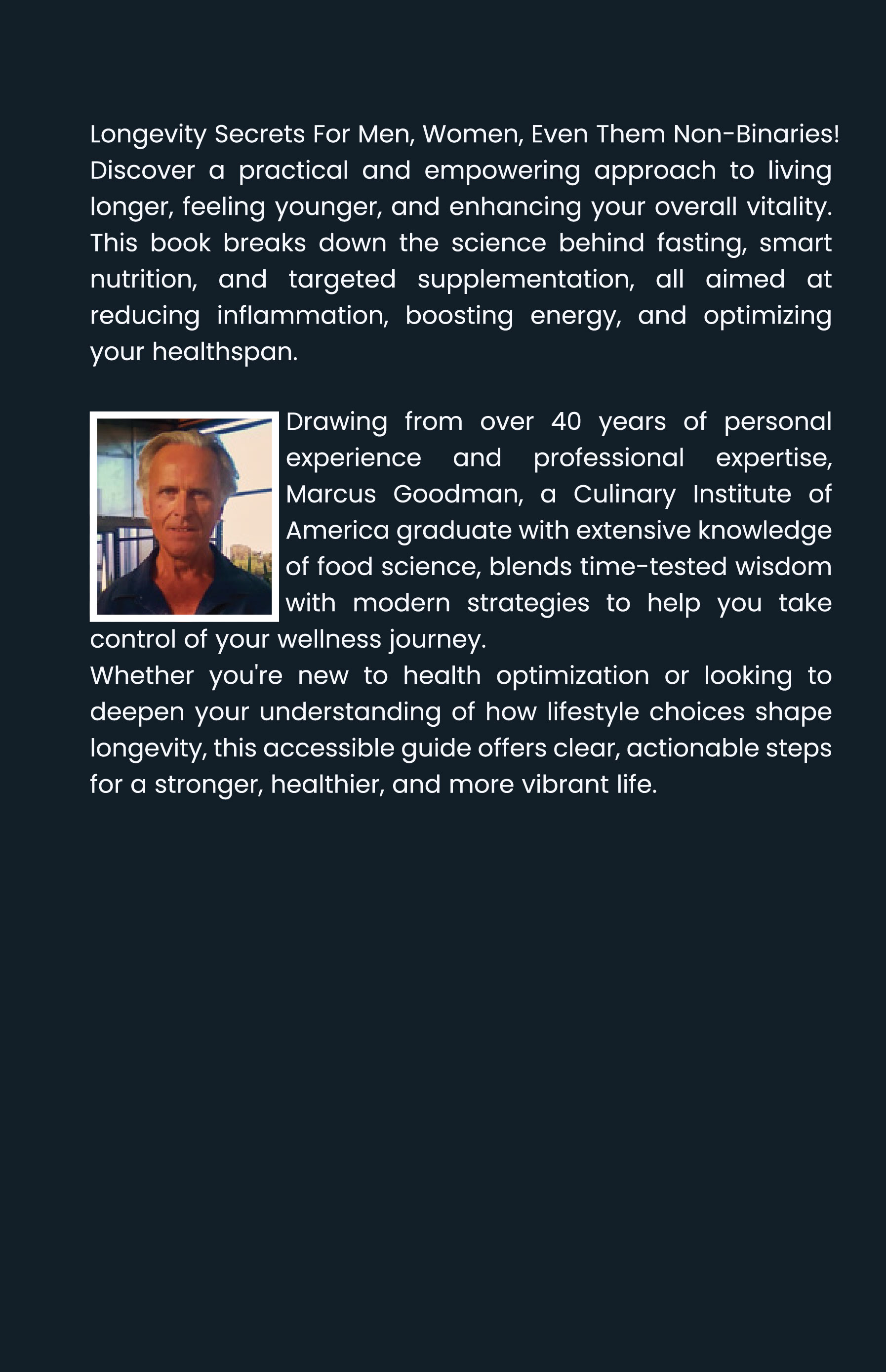
Introduction to the Table of Contents
This table of contents outlines the whole structure of Longevity Secrets for Men, Women, Even Them Non-Binaries! and provides readers with a clear view of the book’s scope, depth, and organization. The title is intentionally playful; the book is serious.
Rather than presenting a narrow diet protocol or a single lifestyle tactic, the book is structured as two integrated systems. The first addresses fasting as a biological and metabolic tool to restore insulin sensitivity, reduce inflammation, and support long-term health. The second focuses on anti-inflammatory nutrition, lifestyle factors, and practical frameworks that help stabilize and extend the benefits of fasting over time.
Each chapter builds logically on the previous one, moving from foundational concepts to applied strategies, safety considerations, cultural context, and long-term sustainability. Together, the chapters form a comprehensive guide designed to be read sequentially or referenced as needed, depending on the reader’s goals and experience level.
The outline below is provided to enable readers to evaluate whether this approach aligns with their interests, health priorities, and readiness for change.
Before outlining what each chapter covers, it is helpful to understand the perspective from which this book is written.
Longevity Secrets for Men, Women, Even Them Non-Binaries! does not begin with rules, protocols, or promises. It starts by reframing the reader’s relationship with food, health, and self-blame.
The first chapter establishes the biological and historical context for fasting so readers can see it not as a modern trend or discipline, but as a profoundly human practice that aligns with how the body has always functioned.
What follows is a chapter-by-chapter overview that shows how the book moves from foundational understanding to practical application—without imposing belief, rigidity, or extremes.
The first chapter is described in greater detail to give you a clear sense of the book’s tone, depth, and approach.
––––––––––––––––––––––––––––––
CHAPTER 1 — THE FOUNDATIONS OF FASTING
––––––––––––––––––––––––––––––
What if I told you that a simple act, as old as humanity itself, holds the key to unlocking a longer and healthier life?
As I watched my parents struggle with their health, I couldn’t help but wonder if things could have been different. Their lives reflected the effects of a diet rich in processed foods and lacking balance. Witnessing that reality pushed me to question the role of food in health, disease, and longevity.
That question led me to fasting.
- Not as a diet.
- Not as punishment.
- But as a practice that has existed across cultures for thousands of years as a tool for renewal — physically, mentally, and spiritually.
––––––––––––––––––––––––––––––
1.1 FASTING THROUGH THE AGES
A HISTORICAL PERSPECTIVE
––––––––––––––––––––––––––––––
Throughout history, fasting has existed across nearly every civilization. It has served as a path of physical reset, spiritual reflection, and emotional discipline.
In religious traditions alone, fasting is practiced by billions of people worldwide.
- During Ramadan, over 1.8 billion Muslims fast from dawn until sunset for spiritual growth and community connection.
- In Christianity, fasting during Lent emphasizes humility, reflection, and restraint.
- In Judaism, Yom Kippur is marked by fasting as a sacred act of atonement and spiritual renewal.
Across these traditions, fasting is not framed as deprivation — but as purification.
Ancient Greece also viewed fasting as medicine for both the body and the mind.
Pythagoras is said to have fasted for 40 days before entering sacred study, believing mental clarity followed physical purification.
Plato regarded fasting as essential to medicine, ranking it alongside sunlight and fresh air.
In India’s Ayurvedic tradition, fasting was prescribed to rest digestion, clear toxins, and rebalance internal energy.
Across cultures, fasting consistently appears as a reset — not an extreme.
In tribal societies, fasting served as a rite of passage, marking the transition into adulthood through inward reflection and physical endurance.
In ancient medicine, healers prescribed fasting to allow the body to restore itself naturally.
Pliny the Elder documented fasting as a means of restoring balance and vitality in Roman medicine.
Socrates, Pythagoras, and many early philosophers believed that abstaining from food allowed the mind to rise above distraction and reach clarity.
These ancient views mirror modern discoveries far more closely than most people realize.
Today, fasting is being studied for:
- Metabolic health
- Longevity
- Cellular repair
- Mental clarity
- Inflammation reduction
Fasting did not disappear.
It simply waited for science to catch up.
––––––––––––––––––––––––––––––
REFLECT AND ENGAGE — YOUR FASTING HERITAGE
––––––––––––––––––––––––––––––
Take a moment to reflect:
- Did fasting exist in your family traditions?
- In religious practice?
- In cultural rituals?
Write down any personal beliefs or experiences you already associate with fasting.
This isn’t about nostalgia.
It’s about reconnecting with something your body likely already understands at a biological level.
––––––––––––––––––––––––––––––
AN EVOLUTIONARY REALITY
––––––––––––––––––––––––––––––
Since prehistoric times, hunter-gatherers experienced regular food scarcity — most often in late winter and early spring.
Modern humans are metabolically similar to those ancestors.
We evolved with:
- Fat-burning capacity
- Ketone production
- Energy conservation mechanisms
- Autophagy (cellular recycling)
- Hormonal adaptations to fasting
Humans did not evolve consuming sweetened beverages, eating three structured meals per day, and snacking continuously between them.
We evolved with fasting.
––––––––––––––––––––––––––––––
1.2 WHY FAST?
UNDERSTANDING THE MODERN APPEAL
––––––––––––––––––––––––––––––
Today, fasting appeals to people for powerful reasons.
- Obesity and metabolic syndrome now affect a massive percentage of the population.
- Heart disease, diabetes, and inflammation-driven illness continue to rise.
Many people feel trapped in cycles of:
- Restrict → binge → guilt → repeat
- Count → fail → restart → repeat
Fasting offers a different path.
Instead of micromanaging food constantly, fasting:
- Reduces insulin resistance
- Triggers fat release
- Simplifies eating
- Restores metabolic flexibility
Beyond the body, fasting brings mental relief.
- No constant meal planning.
- No grazing all day.
- No relentless food decisions.
Many people experience:
- Sharpened focus
- Improved productivity
- Reduced brain fog
- Emotional steadiness
This clarity alone is enough to pull many people toward fasting.
Social media has amplified fasting’s visibility.
Celebrities, athletes, and influencers publicly credit fasting for energy, mental clarity, and body transformation.
Yet beneath the hype, there is also real science.
Studies now show fasting:
- Triggers autophagy
- Improves insulin sensitivity
- Reduces inflammation
- Supports cellular repair
- Stabilizes blood sugar
Fasting is not a trend.
It is an ancient biological switch being rediscovered.
––––––––––––––––––––––––––––––
1.3 FASTING AND MENTAL HEALTH
––––––––––––––––––––––––––––––
Fasting is increasingly explored as a complementary support for mental health.
Research suggests fasting may:
- Increase brain-derived neurotrophic factor (BDNF)
- Support neuroplasticity
- Improve learning and memory
- Influence serotonin, dopamine, and norepinephrine
- Improve mood stability
- Reduce anxiety
- Enhance cognitive clarity
Fasting also strengthens:
- Mindfulness
- Emotional regulation
- Self-awareness
- Impulse control
While fasting should never replace clinical care, it may provide supportive benefits when guided appropriately.
––––––––––––––––––––––––––––––
SOVIET-ERA RUSSIAN FASTING RESEARCH
––––––––––––––––––––––––––––––
In the mid-20th century, the Soviet Union conducted extensive clinical fasting trials for mental illness.
Dr. Yuri Nikolayev led water-only fasting protocols for patients with:
- Schizophrenia
- Depression
- Neuroses
- Bipolar disorder
Patients fasted under medical supervision for weeks.
Remarkably, many showed:
- Reduced hallucinations
- Improved cognition
- Emotional stabilization
- Long-term remission
The mechanisms proposed included:
- Ketone-based brain energy
- Autophagy-driven neural repair
- Neurotransmitter regulation
Despite promising outcomes, this work remained largely unknown outside Russia.
Pharmaceutical medicine became far easier to monetize.
––––––––––––––––––––––––––––––
CONCLUSION — FASTING AS A WINDOW INTO THE MIND
––––––––––––––––––––––––––––––
The Soviet research opened a window into something profound:
That fasting may influence not only the body, but the mind itself.
Modern research now echoes this early work through studies on:
- Intermittent fasting
- Ketogenic metabolism
- Inflammation and mental health
- Neuroplasticity
Fasting is not merely metabolic.
It may also be neurological.
Answers sometimes hide in the simplest places.
––––––––––––––––––––––––––––––
REFERENCES
––––––––––––––––––––––––––––––
What follows is the complete table of contents, allowing you to see the book's complete structure at a glance.
PART I — FASTING, METABOLIC HEALING & LONGEVITY
Introduction: What to Expect, Commentary, and Suggestions About Fasting
Chapter 1: The Foundations of Fasting
1.1 Fasting Through the Ages: A Historical Perspective
1.2 Why Fast? Understanding the Modern Appeal
1.3 Fasting and Mental Health
Conclusion
References
Chapter 2: The Science Behind Fasting
2.1 The Significance of Autophagy
2.2 Metabolic Flexibility: Switching Energy Gears Efficiently
Conclusion
References
Chapter 3: Types of Fasting Explored
3.1 Intermittent Fasting (IF)
3.2 Extended Fasting: Deep Dive into Cellular Renewal
Conclusion
References
Chapter 4: Crafting Your Fasting Plan
4.1 Tailoring Fasting to Your Lifestyle
4.2 Balancing Work, Family, and Fasting
Conclusion
References
Chapter 5: Preparing for Your Fasting Journey
5.1 Mindful Preparation
5.2 Stocking Your Kitchen: Essential Supplies
Conclusion
References
Chapter 6: Overcoming Common Fasting Challenges
6.1 Managing Hunger
6.2 Navigating Social Eating
Conclusion
References
Chapter 7: Understanding Fasting’s Impact on the Body
7.1 It Gets Complicated
7.2 Gut Health and Fasting
References
Chapter 8: Fasting and Chronic Diseases
8.1 Fasting is Free
8.2 Reducing Inflammation
8.3 Stem Cell Activation
8.4 Fasting and Rheumatoid Arthritis
8.5 More About Inflammatory Foods
8.6 Fasting and Sarcopenia
8.7 Fasting and Leaky Gut
8.8 Fasting and Brain Health
8.9 Fasting and Osteoarthritis
8.10 Fasting and Autoimmune Diseases
8.11 Fasting and Type 2 Diabetes
8.12 Fasting and Heart Health
8.13 Fasting and Cancer
Conclusion
References
Chapter 9: Fasting for Mental Clarity and Energy
9.1 Brain Boost
9.2 Energy Levels Unlocked
Conclusion
References
Chapter 10: Nutritional Support During Fasting
10.1 Essential Vitamins
10.2 Nutraceuticals
Conclusion
References
Chapter 11: Safety and Precautions in Fasting
11.1 Who Shouldn’t Fast?
11.2 Fasting with Medications
Conclusion
References
Chapter 12: Breaking the Fast
12.1 Refeeding as a Biological Reset
12.2 Post-Fast Nutrition
References
Chapter 13: Myths and Misconceptions
13.1 Muscle Loss
13.2 Nutrient Deficiency Myths
References
Chapter 14: Advanced Fasting Techniques
14.1 Circadian Rhythm Fasting
14.2 Refeed Days and Cycles
14.3 Meal Plan Ideas
14.4 Advanced Glycation End Products (AGEs)
Chapter 15: Fasting in Different Cultures
15.1 Global Fasting Traditions
15.2 Adaptations Across Diet Types
Conclusion
References
Chapter 16: Integrating Fasting with Fitness
16.1 Synchronizing Fasting and Exercise
16.2 Preserving Muscle Mass
16.3 Building Muscle Without Animal Protein
16.4 Practical Tips
Conclusion
References
Chapter 17: Harnessing Technology for Fasting
17.1 Apps and Trackers
17.2 Using Data for Optimization
Conclusion
References
Chapter 18: Building a Fasting Community
18.1 Finding Your Tribe
18.2 Sharing Success
Conclusion
References
Chapter 19: Long-Term Fasting Strategies for Longevity
19.1 Making Fasting a Lifelong Habit
19.2 Evolving Your Practice
Conclusion
References
Chapter 20: The Future of Fasting and Longevity
20.1 The Science is Compelling
20.2 The Next Frontier
Conclusion
References
PART II — LIVE LONGER THROUGH AN ANTI-INFLAMMATORY DIET
Introduction
Chapter 1: Understanding Inflammation
1.1 The Science of Inflammation
1.2 Chronic Inflammation and Disease
1.3 How Diet Influences Inflammation
References
Chapter 2: The Anti-Inflammatory Diet Blueprint
2.1 What the Diet Really Is
2.2 Health Benefits
2.3 Misconceptions
References
Chapter 3: Identifying and Avoiding Inflammatory Foods
3.1 Foods That Trigger Inflammation
3.2 Understanding Labels
3.3 Additives and Preservatives
References
Chapter 4: Anti-Inflammatory Powerhouses
4.1 Superfoods
4.2 Omega-3s
4.3 Antioxidant-Rich Foods
References
Chapter 5: Meal Planning for Busy Lives
5.1 Planning Tips
5.2 Time-Saving Hacks
5.3 Batch Cooking
References
Chapter 6: Creative and Flavorful Recipes
6.1 Global Cuisines
6.2 Breakfast Ideas
6.3 Dinners
References
Chapter 7: Overcoming Common Barriers
7.1 Eating on a Budget
7.2 Managing Cravings
7.3 Family Support
References
Chapter 8: Dining Out and Social Events
8.1 Smart Restaurant Choices
8.2 Navigating Social Gatherings
8.3 Travel
References
Chapter 9: Supplementing Your Diet
9.1 Key Supplements
9.2 Probiotics and Gut Health
References
Chapter 10: Lifestyle Modifications
10.1 Stress Management
10.2 Physical Activity
10.3 Sleep
References
Chapter 11: Understanding Nutrient Balance
11.1 Nutrient-Dense Meals
11.2 Portion Control
11.3 Essential Vitamins and Minerals
References
Chapter 12: Educating and Engaging Your Family
12.1 Teaching Kids
12.2 Family-Friendly Recipes
References
Chapter 13: Tracking Progress and Adjusting Plans
13.1 Tracking Meals
13.2 Adjusting for Results
References
Chapter 14: Success Stories and Testimonials
14.1 Transformative Journeys
14.2 Professional Testimonials
References
Chapter 15: Staying Motivated
15.1 Expectations
15.2 Building Community
References
Chapter 16: Interactive Tools and Resources
16.1 Templates
16.2 Using Technology
References
Chapter 17: Cultural Healing Foods
17.1 Asian Traditions
17.2 Mediterranean Traditions
References
Chapter 18: Expert Insights and Contributions
18.1 Nutritionists
18.2 Chefs
18.3 Healthcare Practitioners
18.4 Personal Reflections
References
Addendum — 21 Days of Structured Meal Plans
7-Day Intermittent Fasting Plan
7-Day Plant-Based IF Plan
7-Day Fasting-Mimicking Diet Plan
________________________________________________________________________________________________________
Frequently Asked Questions
(For Readers Considering This Book)
Is this book right for me if I’ve tried many diets and failed?
Yes.
This book is written for people who are tired of dieting and suspect the problem is not discipline but biology.
It explains why traditional diets fail and how fasting and inflammation reduction work differently—without requiring constant restriction or willpower.
Do I need to commit to extreme fasting to benefit from this book?
No.
The book emphasizes flexibility and gradual adaptation.
Many readers see meaningful improvements using gentle fasting windows combined with anti-inflammatory eating.
Is this book focused only on weight loss?
No.
Weight loss is often a side effect, not the primary goal.
The core focus is metabolic health, reduced inflammation, improved insulin sensitivity, mental clarity, and long-term longevity.
Is the science solid, or is this another wellness trend?
The book is grounded in modern metabolic and inflammation research, including work on insulin signaling, autophagy, gut health, and aging biology.
It avoids exaggerated claims and explains where fasting is appropriate—and where caution is required.
I’m older / prediabetic / metabolically compromised. Is this safe?
For many people, yes—when approached conservatively.
The book includes safety guidance, medication considerations, and strategies tailored to aging and metabolic vulnerability.
It encourages medical supervision when appropriate.
Will fasting make me feel weak, anxious, or obsessed with food?
Most people experience the opposite over time.
As insulin stabilizes and inflammation decreases, hunger often becomes quieter and more predictable.
The book teaches how to recognize and respond to hunger without fear.
Is this book practical, or mostly theory?
It is highly practical.
You receive clear frameworks, meal planning guidance, food lists, refeed strategies, and structured examples—without rigid rules.
Does this book support plant-based or flexible eating styles?
Yes.
The anti-inflammatory nutrition section supports plant-based, omnivorous, and mixed approaches.
No single diet ideology is imposed.
Do I need supplements or expensive products to follow this approach?
No.
Fasting is free.
The book discusses optional supplements but emphasizes food, timing, and lifestyle first.
How soon might I notice changes?
Many people notice changes in energy, mental clarity, appetite, or digestion within days to weeks. Greater metabolic and inflammatory improvements develop over time with consistency.
Is this book written for beginners or advanced readers?
Both.
Foundational chapters explain concepts clearly, while later sections offer deeper strategies for readers who want to refine and optimize.
What if I’m skeptical but curious?
That’s exactly who this book is for.
It does not ask for blind belief—only curiosity and experimentation.
You are encouraged to observe your own body’s responses.
What is the biggest takeaway I can get?
A sense of calm and clarity around food and health—often for the first time in years. A feeling that your body is finally “working with you instead of against you.”
How do I get started if I buy the book?
You simply begin with the early chapters.
No immediate commitment is required.
The book is designed to meet you where you are.
About the Author
Many people sense that something about modern life quietly works against the body’s natural intelligence. Eating patterns feel rushed. Health advice feels contradictory. Effort increases, yet results remain fragile. Over time, this creates frustration—not because people lack discipline, but because the underlying system never quite settles.
Marcus Goodman writes about longevity and metabolic health from that observation. Rather than asking readers to adopt rigid beliefs or force compliance, his work begins by identifying what disrupts biological rhythm and what tends to restore it. Fasting, inflammation awareness, and rhythm-based nourishment are explored not as doctrines, but as tools—used flexibly, tested personally, and adjusted over time.
This approach is grounded in modern science while remaining attentive to lived experience. It allows readers to move toward clarity, energy, and resilience while moving away from confusion, constant effort, and cycles of relapse. For those who prefer structure, the book offers clear frameworks. For those who value choice, it leaves room for adaptation.
The intention is simple: to reduce interference so the body can do what it already knows how to do. When pressure eases and understanding increases, health often begins to organize itself naturally—without force, fear, or constant control.
Marcus Goodman examines how modern habits disrupt biological rhythm and how reducing interference—through fasting, nourishment, and awareness—often allows health to re-emerge naturally, without rigidity or force.
Your Next Step
You don’t need to change everything at once, commit to a rigid plan, or decide how far this journey will go today. You can simply begin by understanding what your body has been responding to—and why certain approaches quietly work while others repeatedly fail. This book offers a clear structure for those who want guidance and flexible pathways for those who prefer choice. It helps you move toward steadier energy, clarity, and resilience while gently stepping away from confusion, metabolic frustration, and cycles that never quite resolve. You can explore at your own pace, test what fits, and let understanding replace effort. When you’re ready, the path is already laid out.
Get Longevity Secrets for Men, Women, Even Them Non-Binaries! on Amazon
(Opens in a new tab — you can return here anytime)
Final Reassurance
Nothing in this book asks you to believe, force, or commit beyond what feels reasonable. It simply offers clarity—about how the body responds to rhythm, rest, and nourishment—and invites you to notice what happens when interference is reduced. You can move slowly, adapt freely, and stop or adjust at any point. The goal is not compliance, but understanding. From there, your body tends to respond in its own time.
Caring for the Body as Part of a Spiritual Practice
Many people want to get old without being old. They want the years, but not the consequences. They hope for wisdom without decline, vitality without restraint, and spiritual insight without the discipline required to maintain the body through which life is actually lived.
This hope is understandable. It is also unrealistic.
The human organism is not an accessory to the spiritual life. It is the medium through which perception, thought, and awareness occur. Every spiritual tradition ultimately operates through a biological system with limits, vulnerabilities, and predictable responses to neglect. To disregard those realities while claiming to pursue higher awareness is not transcendence—it is a kind of denial.
It is therefore not unusual to encounter individuals who sincerely believe they are on a spiritual path while maintaining habits that steadily degrade their health. Chronic overeating, poorly chosen diets, lack of metabolic discipline, and disregard for physical conditioning gradually diminish energy, clarity, and resilience. These patterns are often rationalized as irrelevant to spiritual development, as though consciousness could somehow flourish independently of the body that sustains it.
But the body keeps the ledger.
Over time, metabolic dysfunction, inflammation, and declining physiological resilience impose limits that cannot be bypassed by philosophy or belief. The organism responds to inputs—food, activity, rest, fasting—with remarkable consistency. When those inputs are careless, the results are equally predictable.
A more coherent view recognizes that caring for the body is not separate from a reflective life. It is part of it.
Food choices require awareness. Restraint around consumption requires discipline. Periods of fasting require patience and the ability to tolerate discomfort without immediate gratification. These are not merely health techniques. They are practices that mirror the same qualities cultivated in contemplative traditions: attention, restraint, and clarity about one's habits.
In this sense, health practices can function as a form of grounded spirituality—one that does not pretend the biological organism can be ignored while pursuing meaning or insight. Instead, it treats the body as the necessary foundation for sustained awareness and agency over the long arc of a lifetime.
For readers interested in exploring this perspective in practical, evidence-minded terms, Longevity Secrets examines how food choices, fasting patterns, and metabolic awareness can support a longer healthspan and a clearer relationship with the body that makes every human experience possible.

Longevity Is Cumulative
Healthspan reflects how well decisions were understood when they mattered.
A practical, evidence-minded book on fasting, nutrition, and aging—without hype or programs.

© Marcus Goodman LLC. All rights reserved