Religion and Fairy Tales Have a Lot in Common
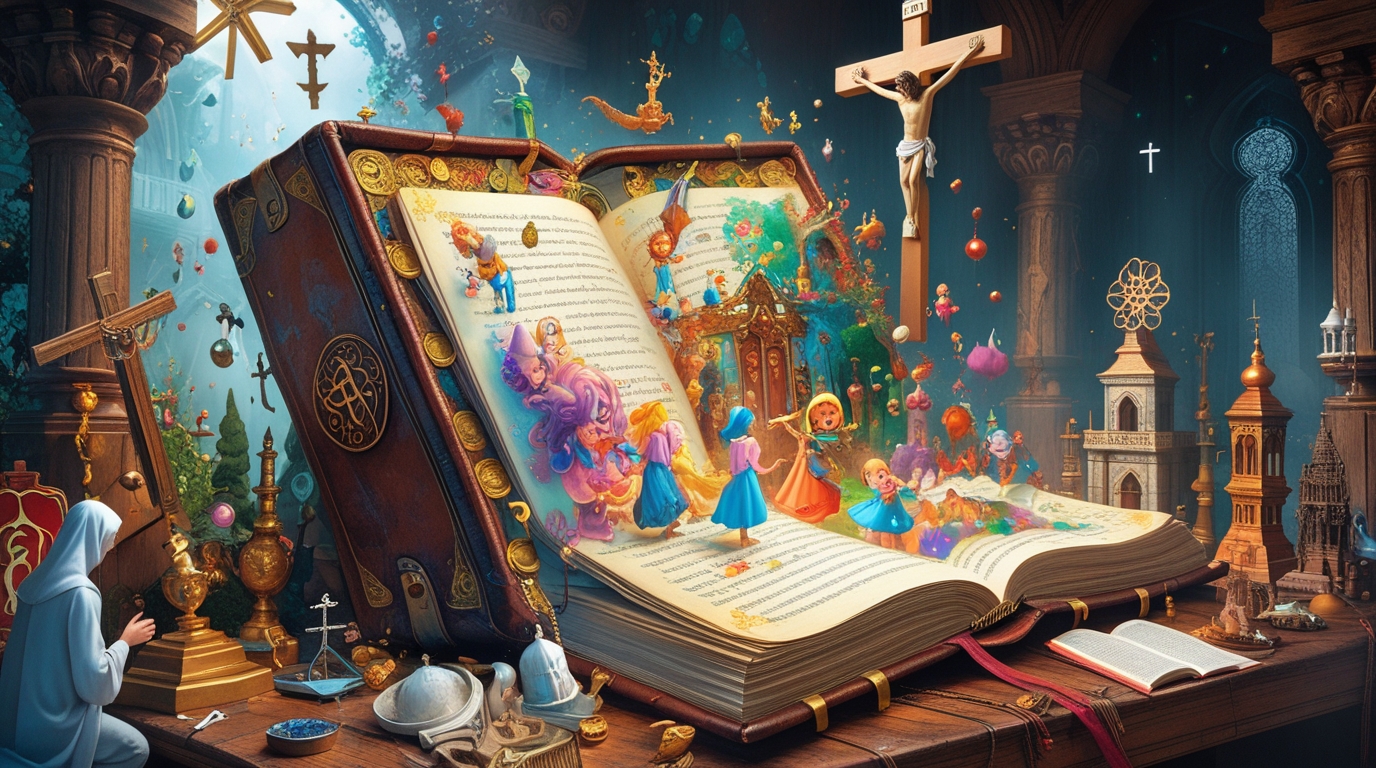
In the vast tapestry of human storytelling, two distinct threads have woven themselves into the fabric of our cultural consciousness: modern religions and fairy tales. While seemingly disparate, these narratives share common elements that have shaped our understanding of the world, our place in it, and the forces that govern our existence.
At first glance, modern religions and fairy tales appear to reside in separate realms—one anchored in faith, the other in fantasy. However, both serve as intricate frameworks that provide answers to life's fundamental questions and impart moral lessons to those who seek guidance.
In the realm of modern religions, believers find solace in the teachings of revered prophets, divine scriptures, and a grand cosmic narrative that explains the creation of the universe. These stories often feature larger-than-life figures, supernatural events, and moral codes that govern the conduct of their adherents. Miracles, prophecies, and tales of salvation echo the fantastical elements found in fairy tales, where heroes embark on epic quests and encounter magical beings in their pursuit of a higher purpose.
Similarly, fairy tales transport readers to enchanted worlds where animals speak, witches cast spells, and humble protagonists overcome seemingly insurmountable challenges. Morality and ethics are woven into the very fabric of these narratives, cautioning against greed, vanity, and the consequences of straying from the path of righteousness. In both religious parables and fairy tales, the struggle between good and evil is a recurring motif, with virtue ultimately triumphing over malevolence.
Moreover, the archetypal motifs found in both modern religions and fairy tales speak to universal human experiences. The hero's journey, the quest for enlightenment, and the battle between light and darkness are motifs that transcend cultural boundaries. These shared elements reflect our collective desire to make sense of the world, find purpose in our lives, and grapple with the complexities of morality.
However, a critical distinction emerges when one considers the nature of belief. While modern religions often require unwavering faith in a higher power, fairy tales are typically recognized as imaginative stories meant to entertain and impart wisdom. The former seeks to guide individuals toward spiritual fulfillment, while the latter invites readers to explore fantastical realms without necessarily asserting their existence in the tangible world.
In conclusion, the parallels between modern religions and fairy tales underscore the timeless human quest for meaning, morality, and understanding. Whether through divine revelations or whimsical fables, these narratives continue to shape our perceptions of the world and our place within it, serving as mirrors that reflect the collective aspirations, fears, and virtues of humanity across cultures and ages.
Belief in Fairy Tale Religions Can Be Problematic
________________________________________________________________________________________________________
Believing that a fairy tale religion is real can give rise to a myriad of problems, ranging from individual psychological distress to broader societal issues. While it is essential to respect diverse beliefs and perspectives, there are inherent challenges associated with treating a fantastical narrative as literal truth.
- Reality Distortion: Accepting a fairy tale religion as reality can lead to a distortion of one's perception of the world. The boundaries between fiction and reality become blurred, potentially hindering a person's ability to navigate and understand the tangible aspects of life.
- Stifling Critical Thinking: Belief in a fairy tale religion may discourage critical thinking and skepticism. Individuals might be less inclined to question the teachings and dogmas of their faith, hindering intellectual growth and inhibiting the pursuit of knowledge beyond the confines of the narrative.
- Intolerance and Exclusivity: A firm belief in the absolute truth of a fairy tale religion can foster an atmosphere of intolerance towards differing beliefs. This exclusivity may lead to conflicts between adherents and non-believers, hindering social cohesion and understanding among diverse communities.
- Ethical Dilemmas: Some fairy tales, particularly those within religious contexts, may contain moral codes that, when taken literally, can pose ethical challenges. Interpreting these codes without contextual consideration can lead to a rigid adherence to outdated principles, potentially justifying discrimination or harm to certain groups.
- Psychological Strain: The cognitive dissonance arising from reconciling the fantastical elements of a fairy tale religion with the demands of reality can induce psychological stress. Individuals may struggle with conflicting beliefs, leading to anxiety, guilt, or a sense of alienation from those who do not share similar convictions.
- Stunted Social Progress: Societies that predominantly adhere to fairy tale religions may face challenges in adapting to societal progress. The resistance to change based on ancient narratives can impede advancements in science, technology, and social justice, hindering overall societal well-being.
- Escapism and Inaction: Believing in a fairy tale religion might foster a sense of escapism, where individuals place more emphasis on the afterlife or supernatural interventions rather than actively engaging in addressing real-world problems. This can lead to a lack of motivation to improve living conditions or tackle pressing social issues.
- Manipulation and Exploitation: Those in positions of authority within a fairy tale religion may exploit believers for personal gain. Manipulative leaders can use the promise of divine rewards or punishments to control followers, leading to financial exploitation, emotional abuse, or the suppression of dissent.
It is important to approach religious beliefs with a nuanced and open-minded perspective, recognizing the potential impact they can have on individuals and society. Encouraging critical thinking, fostering dialogue, and promoting tolerance are essential components of navigating the complexities associated with belief systems, whether they are grounded in reality or rooted in the realms of fantasy.
Caring for the Body as Part of a Spiritual Practice
Many people want to get old without being old. They want the years, but not the consequences. They hope for wisdom without decline, vitality without restraint, and spiritual insight without the discipline required to maintain the body through which life is actually lived.
This hope is understandable. It is also unrealistic.
The human organism is not an accessory to the spiritual life. It is the medium through which perception, thought, and awareness occur. Every spiritual tradition ultimately operates through a biological system with limits, vulnerabilities, and predictable responses to neglect. To disregard those realities while claiming to pursue higher awareness is not transcendence—it is a kind of denial.
It is therefore not unusual to encounter individuals who sincerely believe they are on a spiritual path while maintaining habits that steadily degrade their health. Chronic overeating, poorly chosen diets, lack of metabolic discipline, and disregard for physical conditioning gradually diminish energy, clarity, and resilience. These patterns are often rationalized as irrelevant to spiritual development, as though consciousness could somehow flourish independently of the body that sustains it.
But the body keeps the ledger.
Over time, metabolic dysfunction, inflammation, and declining physiological resilience impose limits that cannot be bypassed by philosophy or belief. The organism responds to inputs—food, activity, rest, fasting—with remarkable consistency. When those inputs are careless, the results are equally predictable.
A more coherent view recognizes that caring for the body is not separate from a reflective life. It is part of it.
Food choices require awareness. Restraint around consumption requires discipline. Periods of fasting require patience and the ability to tolerate discomfort without immediate gratification. These are not merely health techniques. They are practices that mirror the same qualities cultivated in contemplative traditions: attention, restraint, and clarity about one's habits.
In this sense, health practices can function as a form of grounded spirituality—one that does not pretend the biological organism can be ignored while pursuing meaning or insight. Instead, it treats the body as the necessary foundation for sustained awareness and agency over the long arc of a lifetime.
For readers interested in exploring this perspective in practical, evidence-minded terms, Longevity Secrets examines how food choices, fasting patterns, and metabolic awareness can support a longer healthspan and a clearer relationship with the body that makes every human experience possible.

Longevity Is Cumulative
Healthspan reflects how well decisions were understood when they mattered.
A practical, evidence-minded book on fasting, nutrition, and aging—without hype or programs.

© Marcus Goodman LLC. All rights reserved