A Meditation Practice is Rarely Perfect
Engaging in a regular meditation practice is widely recognized for its positive impact on both mental and physical well-being.
The ultimate goal of this journey is the recognition of your God-Self, a realization that is believed to take time. It's important to acknowledge that our perception of time is a construct of our shared consciousness, and in essence, you exist eternally as an extension of the One Holy Source that created you. In embracing your role as an extension of this divine essence, you are already on the path to God-Self realization; it's a matter of recognizing this inherent truth.
A daily meditation practice, combined with a personalized approach to worshiping God that resonates with your intuition, can be a powerful catalyst on your journey toward recognizing your God-Self. The specific form of meditation you choose is less important than your personal belief in its effectiveness.
Numerous empirical studies have demonstrated the tangible benefits of a daily meditation practice, irrespective of one's belief system. It's worth emphasizing that the term "practice" is deliberate. You need not become overly preoccupied with whether your meditation is yielding immediate results; the natural tendency is to wonder, but this doubt is often a manifestation of the ego-mind's resistance to change.
The ego-mind typically resists relinquishing control, making it challenging to maintain focus during meditation. As anxiety surfaces, the ego-mind's attempt to regain control intensifies. To counter this, approach your meditation with gentle intent and allow whatever thoughts arise to pass without judgment.
Gradually, as you persist in your meditation practice, you will come to realize that the ego-mind is not your true self. This recognition is a pivotal step toward connecting with your God-Self.
In my personal daily meditation practice, I use Holosync recordings with headphones. These specialized audio recordings help synchronize brainwave patterns with deep meditative states, a technology that has stood the test of time. Please note that this is not an affiliate link; it's simply a recommendation based on my own experience.
During meditation, it's beneficial to observe your internal and external experiences without judgment, adopting the role of your God-Self's Witness. Although this may seem challenging initially, many start by simply focusing on their breath, counting to a fixed number like four, and returning to one—a practice known as mindful meditation, which has gained widespread popularity.
It's important to recognize that mindfulness meditation is a valuable tool for introspection, offering an alternative to seeking external entities for guidance. If you choose to invest in learning mindful meditation, that's perfectly acceptable. However, bear in mind that it is a simple yet demanding practice that requires consistency and nonjudgmental discipline.
Meditation essentially involves disciplining and distancing yourself from the ego-mind in a concentrated manner. Observing your thoughts and experiences without judgment is a worthwhile exercise, both during and outside of meditation.
Through persistent practice, you will gradually identify with the nonjudgmental Witness within you, representing your God-Self.
As you continue your spiritual journey, consider cultivating unconditional happiness. It's a straightforward concept—just stop setting preconditions for your happiness. While it's a simple idea, it isn't always easy to implement. However, the effort is well worth it. Remember that God desires your happiness, so embrace happiness for the sake of the divine.
Chanting AUM is a Very Old Meditation Practice and Has a Great Many Centuries of Collective Belief Empowering It
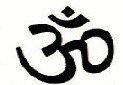
Repetitive chanting, an ancient and time-tested form of meditation, holds a special place in the realm of mindfulness practices.
Many of us are familiar with the practice of chanting "AUM," often written as "OM." Interestingly, this symbol represents both the sacred sound AUM and the commonly used greeting "Namaste." It may seem unusual, but such is the richness of symbolism.
In my perspective, AUM is a more accurate pronunciation. It's a three-syllable word, and the A, U, and M should be enunciated distinctly. Proper mouth positioning plays a significant role: relax your jaw for the A, round your lips for the U, and close your mouth for the M. The A should be pronounced as a long AH, the U as a short extended sound, and the M in its usual manner. Lingering over these syllables can bring a soothing and relaxing effect.
Some practitioners attach specific meanings to these sounds, with the "A" representing undifferentiated potential energy, the "U" symbolizing creative energy or what is being created, and the "M" signifying what has been created.
Regardless of the chant you choose, aim to let it emanate from your solar plexus, resonating through your core and filling you with a vibrating sensation after you inhale deeply into your belly.
Repetitive chanting serves a dual purpose. Firstly, it gently disciplines and focuses the often restless ego-mind on a relatively simple task, aligning with the core objective of most meditation practices. Secondly, it encourages healthy and mindful breathing.
Repetitive chanting is an active form of meditation that requires no prior training to derive benefits, although cautionary notes about potential injuries and side effects may abound. It's worth noting that some of these warnings may stem from the intentions of certain spiritual leaders seeking disciples, so exercise discernment.
Avoid hyperventilation. Perhaps because of the deep breathing, falling into a trance-like state while meditating and chanting may happen, sometimes with accompanying visions. Let whatever happens be okay. If you incorporate deep breathing or pranayama, do so in a seated or reclining position. While both work effectively, the conventional wisdom leans towards the seated posture, emphasizing erect and unsupported posture. Body positioning in meditation is steeped in belief, and it can get intricate, including discussions about energy flow through the vagus nerve when seated correctly.
The science behind mindful meditation and its effects on the vagus nerve is intriguing. Personally, I believe that energy flow along the vagus nerve remains unaffected by gravity during meditation, which is the key distinction between sitting and reclining positions.
Here are some practical tips based on my experience with meditation and chanting:
- Do not chant or meditate while driving. When driving, stay focused on the road and the present moment. Engaging in a mindful internal dialogue about your surroundings can keep you grounded while driving.
- Be mindful of the potential side effects of excessive deep breathing, such as manic behavior or excessive attachment to material possessions. These may be tricks of the ego-mind trying to distract you. Maintain your role as the God-Self Witness, observing without judgment.
- Embrace belly-breathing, which calms the mind in all circumstances and is especially crucial during meditation. Notice that when you're upset or anxious, your breathing tends to be shallow and centered in the chest, whereas relaxed or sleeping states involve deep belly-breathing, where the diaphragm plays a central role.
- Persistence is the key to any successful meditation practice. Dedicate yourself to the journey, and over time, you'll uncover the profound benefits of connecting with your inner self.
In the realm of meditation, repetition, practice, and an open mind are your greatest allies on the path to self-discovery and inner peace.
All Forms of Meditation are Beneficial
Whether it's being mindful, chanting, praying, looking at a spot on the wall, watching or counting breaths, gazing at yourself in the mirror, looking at the flame of a fire or candle, directing your attention on a real or imagined thing of any kind, it's all about disciplining and gaining control of ego-mind. As you persistently practice doing this you will naturally be strengthening your awareness of your God-Self.
Just remember to be as persistent, gentle, patient, and nonjudgmental as possible no matter how busy your ego-mind gets while practicing meditation. Again, let whatever happens be okay.
Namaste
________________________________________________________________________________________________________
Caring for the Body as Part of a Spiritual Practice
Many people want to get old without being old. They want the years, but not the consequences. They hope for wisdom without decline, vitality without restraint, and spiritual insight without the discipline required to maintain the body through which life is actually lived.
This hope is understandable. It is also unrealistic.
The human organism is not an accessory to the spiritual life. It is the medium through which perception, thought, and awareness occur. Every spiritual tradition ultimately operates through a biological system with limits, vulnerabilities, and predictable responses to neglect. To disregard those realities while claiming to pursue higher awareness is not transcendence—it is a kind of denial.
It is therefore not unusual to encounter individuals who sincerely believe they are on a spiritual path while maintaining habits that steadily degrade their health. Chronic overeating, poorly chosen diets, lack of metabolic discipline, and disregard for physical conditioning gradually diminish energy, clarity, and resilience. These patterns are often rationalized as irrelevant to spiritual development, as though consciousness could somehow flourish independently of the body that sustains it.
But the body keeps the ledger.
Over time, metabolic dysfunction, inflammation, and declining physiological resilience impose limits that cannot be bypassed by philosophy or belief. The organism responds to inputs—food, activity, rest, fasting—with remarkable consistency. When those inputs are careless, the results are equally predictable.
A more coherent view recognizes that caring for the body is not separate from a reflective life. It is part of it.
Food choices require awareness. Restraint around consumption requires discipline. Periods of fasting require patience and the ability to tolerate discomfort without immediate gratification. These are not merely health techniques. They are practices that mirror the same qualities cultivated in contemplative traditions: attention, restraint, and clarity about one's habits.
In this sense, health practices can function as a form of grounded spirituality—one that does not pretend the biological organism can be ignored while pursuing meaning or insight. Instead, it treats the body as the necessary foundation for sustained awareness and agency over the long arc of a lifetime.
For readers interested in exploring this perspective in practical, evidence-minded terms, Longevity Secrets examines how food choices, fasting patterns, and metabolic awareness can support a longer healthspan and a clearer relationship with the body that makes every human experience possible.

Longevity Is Cumulative
Healthspan reflects how well decisions were understood when they mattered.
A practical, evidence-minded book on fasting, nutrition, and aging—without hype or programs.
© Marcus Goodman LLC. All rights reserved